
 Amir Ashraff (Cikgu Amir) · Organizational Development Specialist
In today's fast-changing economy, where skills have a shorter shelf life than ever, Learning & Development (L&D) has moved from a "nice-to-have" HR function to a critical business strategy. It's no longer just about classroom sessions; it's about building a culture of continuous improvement and adaptability.
The three pillars of modern L&D
Effective L&D programmes rest on three pillars that make sure learning isn't just consumed, but applied:
- Upskilling and reskilling: with the rise of AI and automation, upskilling (improving current skills) and reskilling (learning new skills for a different role) are essential for employee retention and organisational agility.
- Leadership development: nurturing the next generation of leaders through mentorship and behavioural training builds a stable pipeline of talent ready for executive challenges.
- Personalised learning paths: moving away from one-size-fits-all, modern L&D uses data to give learners content that matches their career goals and skill gaps.
Key trends shaping the industry
- Microlearning: small, focused bursts of 3–5 minutes that fit into a busy workday.
- Gamification: game elements like leaderboards, badges and points to lift engagement and completion.
- Social learning: peer-to-peer knowledge sharing through internal forums, collaborative projects and communities of practice.
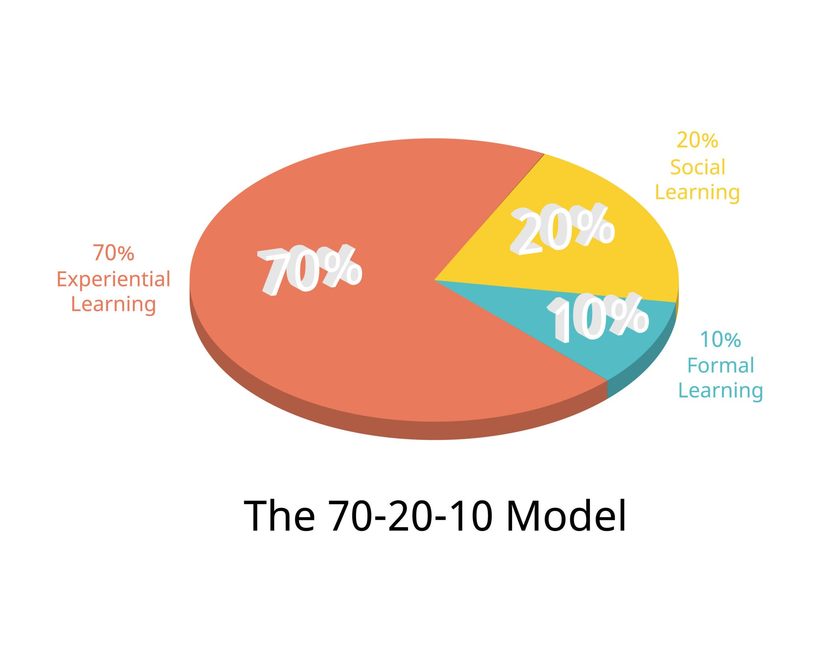
- The 70-20-10 model: the idea that about 70% of learning comes from experience, 20% from social interaction and 10% from formal education.
Measuring success: beyond completion rates
L&D success used to be measured by how many people finished a course. Today the focus is impact:
- Behavioural change: are employees actually doing things differently on the job?
- Business ROI: can a programme be linked to higher sales, fewer safety incidents or better customer satisfaction?
Conclusion
Learning & Development is the engine of organisational growth. By moving beyond traditional lectures to interactive, tech-driven and peer-based learning, companies keep their workforce resilient in the face of change.
See how I apply this in my training programmes.